
Many people expect their period symptoms to follow a predictable script. When cramps are stronger one month, emotions feel heavier the next, or symptoms barely show up at all, it can be confusing or worrying. In reality, symptom variability is a common part of having a menstrual cycle. Understanding why symptoms change can help reduce the pressure to “figure it out” or assume something is wrong.
Periods do not happen in isolation. They occur within the context of a whole life, and that context changes constantly.
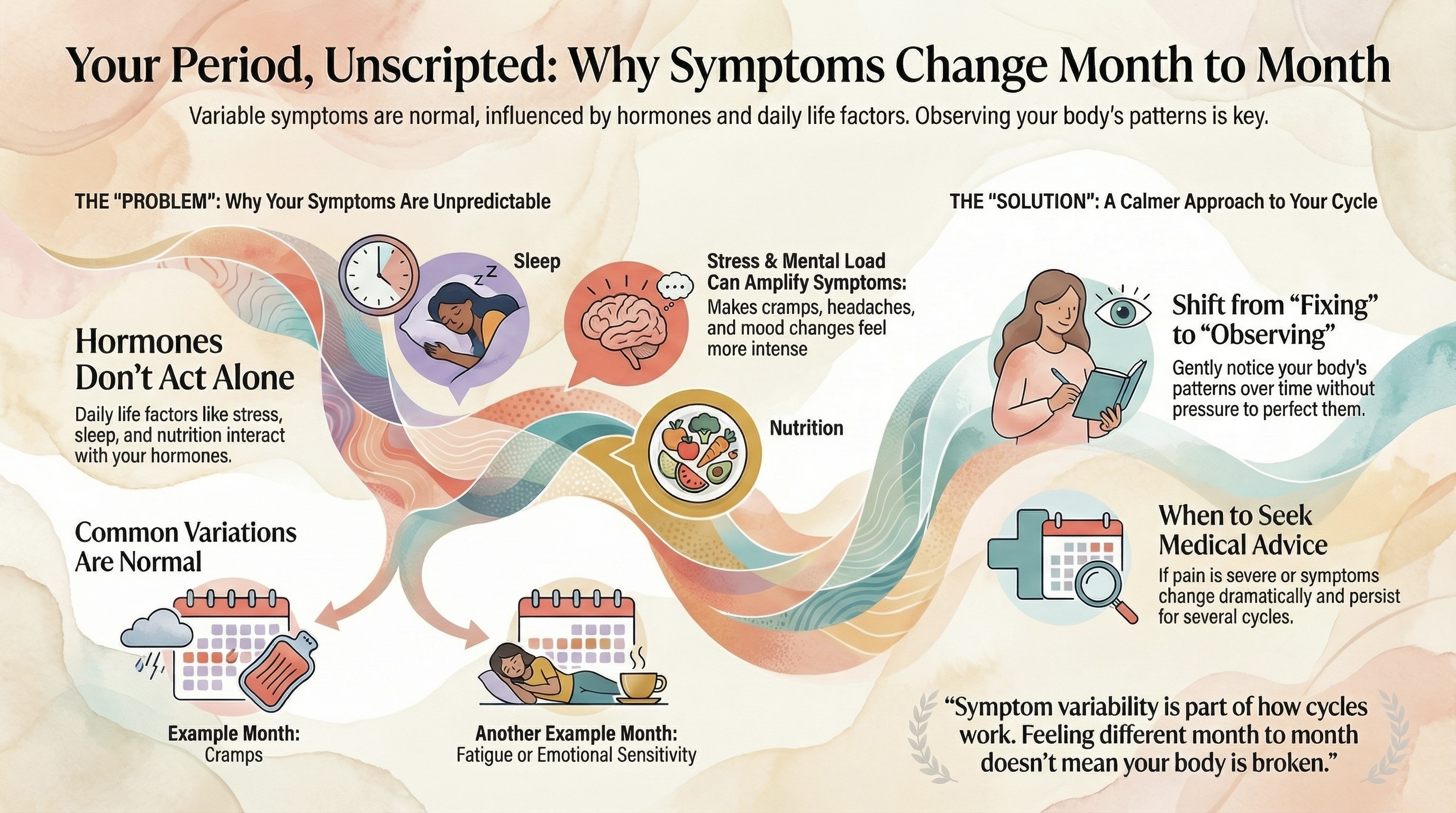
Why Period Symptoms Can Feel Different Every Month
The cycle meets real life
Period symptoms are shaped by hormones, but hormones do not act alone. They respond to what is happening in the body and the mind at any given time. Because daily life is always shifting, the way symptoms show up can shift too.
Hormone levels naturally rise and fall throughout the cycle. These changes can influence how the body feels physically and emotionally. At the same time, stress levels, sleep quality, nutrition, workload, illness, and emotional demands all interact with those hormonal changes.
This means that even if hormone patterns are similar from month to month, the experience of symptoms may not be.
Hormones and context, working together
Hormones like estrogen and progesterone affect many systems in the body, including the nervous system, muscles, digestion, and mood regulation. Their fluctuations can influence sensations such as cramping, bloating, fatigue, or emotional sensitivity.
Life context can amplify or soften those effects. For example, a month with higher stress or mental load may coincide with stronger symptoms. A month with more rest or emotional support may feel easier, even if hormone changes are similar.
This interaction is not a failure of the body. It reflects how responsive and adaptive it is.
The role of stress and mental load
Stress does not need to be dramatic to have an impact. Ongoing responsibilities, decision-making, emotional labor, or lack of downtime can all contribute to mental load. The body often registers this load, even when it feels manageable on the surface.
Stress can affect how the body processes pain, how muscles tense or relax, and how emotions are experienced. As a result, period symptoms like cramps, headaches, or mood changes may feel more intense during high-stress times.
This does not mean symptoms are “all in your head.” It means the mind and body are closely connected, especially during hormonal shifts.
Why symptoms aren’t always predictable
It is tempting to look for exact causes or patterns for every symptom. But cycles are influenced by many overlapping factors, and not all of them are visible or measurable.
Ovulation timing can shift. Sleep patterns change. Emotional experiences vary. Even subtle differences from one month to the next can alter how symptoms feel.
Because of this, symptoms may appear unexpectedly, disappear without explanation, or change in intensity. Unpredictability does not mean chaos — it means flexibility.
Common variations people notice
Many people report that symptoms come and go over time. One month may include noticeable cramps, while the next includes very little discomfort. Emotional sensitivity may show up strongly some cycles and barely at all in others.
Some notice digestive changes one month and fatigue the next. Others feel physically fine but emotionally low, or vice versa. These shifts can happen even when cycles are otherwise regular.
Experiencing different symptoms, or the same symptoms with different intensity, is a shared experience for many people with menstrual cycles.
What is generally considered normal
A wide range of period symptoms can fall within normal patterns. Mild to moderate cramps, bloating, breast tenderness, fatigue, headaches, or mood changes can all occur at different points in different cycles.
Normal also includes months with very few symptoms. It includes cycles that feel harder during stressful periods and easier during calmer ones.
What matters more than individual symptoms is the overall pattern across time. Occasional changes, even noticeable ones, are often part of normal variation.
Observing trends instead of chasing control
Trying to control or eliminate every symptom can create unnecessary pressure. Bodies are not systems that can be optimized into perfect consistency.
A gentler approach is to observe trends over time. Noticing what tends to show up repeatedly, what appears only occasionally, and what changes alongside life events can provide context without judgment.
Awareness does not require fixing. Sometimes it simply means recognizing that variability is part of how cycles work.
When it can make sense to seek medical advice
While symptom variability is common, there are times when additional support can be helpful. Symptoms that feel severe, suddenly change and persist, or significantly interfere with daily life may be worth discussing with a healthcare professional.
Pain that feels unmanageable, emotional symptoms that feel overwhelming, or patterns that shift dramatically over several cycles can all be reasons to seek guidance. Asking questions is about understanding and support, not assuming something is wrong.
A calm conclusion
Period symptoms change because bodies change, lives change, and hormones respond to both. Feeling different from one month to the next does not mean something is broken or out of balance.
Understanding symptom variability as normal — and observing patterns over time rather than chasing control — can help create a calmer, more trusting relationship with the cycle.