
Not all bleeding during a menstrual cycle looks the same. Many people notice light bleeding at times that don’t line up with their expected period and wonder what it means. Is it an early period? A late one? Something to worry about? Understanding the difference between spotting and a period can reduce confusion and help make sense of changes without jumping to conclusions.
Light bleeding can be surprising, but it is often part of the wide range of normal menstrual experiences.
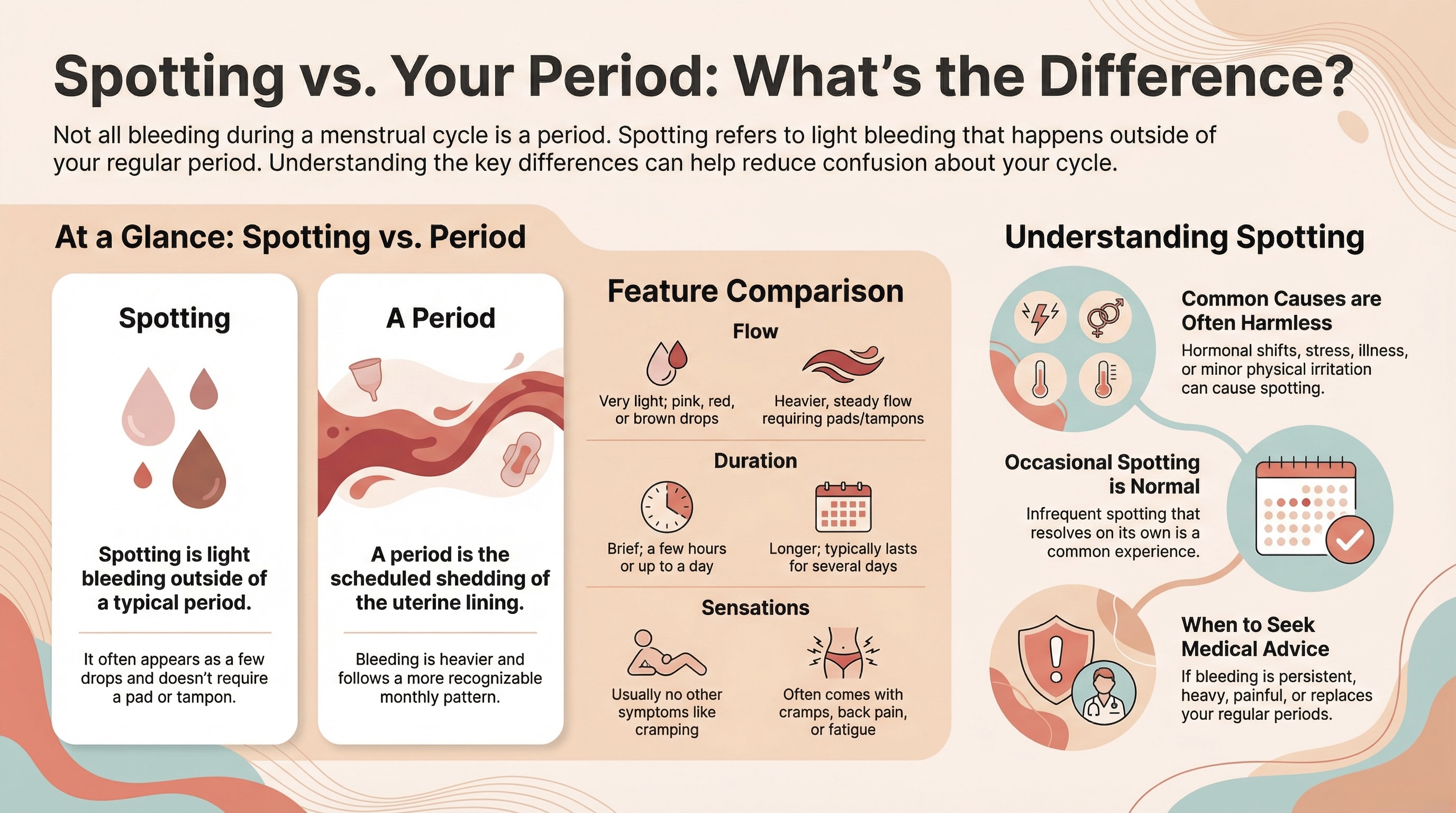
Spotting vs Period
What spotting is, in simple terms
Spotting refers to light bleeding that happens outside of a typical period. It is usually much lighter than a period and often shows up as a few drops of blood, light staining on underwear, or blood noticed when wiping. Spotting may be pink, red, or brown and often doesn’t require a pad or tampon.
A period, by contrast, is the shedding of the uterine lining. Period bleeding is usually heavier, lasts several days, and follows a more recognizable pattern for each person.
The key difference is not just how much blood appears, but what the body is doing at that time in the cycle.
Common causes of spotting
Spotting can happen for many reasons, and most of them are not dangerous or urgent.
Hormonal shifts are a common cause. As hormone levels rise and fall across the cycle, small amounts of bleeding can occur, especially around ovulation. This mid-cycle spotting may happen once in a while or occasionally repeat.
Spotting can also occur when the lining of the uterus is adjusting. This may happen during times of stress, illness, or schedule changes, when the cycle’s timing shifts slightly.
Sexual activity, pelvic exams, or minor irritation of the cervix can sometimes cause light bleeding as well. This type of spotting is usually brief and resolves on its own.
Importantly, spotting does not always have a clear, identifiable reason. Bodies are responsive systems, and small variations can happen without a specific explanation.
How spotting differs from a period
Spotting and periods feel different for many people once they know what to look for.
Spotting is usually light, brief, and unpredictable. It may last a few hours or a day, sometimes appearing and disappearing quickly. It often does not come with the typical sensations of a period, such as cramping or a steady flow.
A period tends to have a clearer beginning and end. Flow is heavier, lasts several days, and often follows a familiar pattern for that person. Periods are also more likely to come with physical sensations like cramps, back discomfort, or fatigue.
Because spotting can happen close to an expected period, it is sometimes mistaken for an early or late start. Over time, noticing patterns can help clarify the difference.
Common experiences people notice
Many people experience spotting at least once in their lives. Some notice occasional mid-cycle spotting, while others see light bleeding just before or after their period.
Spotting may appear brown, especially if blood takes longer to leave the body. This can look alarming at first but often reflects older blood rather than active bleeding.
Some cycles include spotting, while others do not. A cycle with spotting followed by a normal period is a common experience and does not automatically indicate a problem.
What is generally considered normal
Occasional spotting can fall within the range of normal menstrual experiences. Light bleeding that happens infrequently, resolves on its own, and does not come with significant pain or other symptoms is often not a cause for concern.
Normal also includes variation. A person who never experienced spotting before may notice it during a particularly stressful time or after a life change. A person who experiences spotting occasionally may go months without it.
As with many cycle-related experiences, patterns over time matter more than a single occurrence.
When patterns are worth noting
While spotting itself is often harmless, paying attention to patterns can be useful. Spotting that happens regularly at the same point in the cycle, becomes more frequent, or changes significantly in appearance may be worth observing more closely.
Light bleeding that continues for many days, occurs between every cycle, or is accompanied by pain, unusual discharge, or other symptoms may be a reason to seek clarity from a healthcare professional.
Noting patterns does not mean assuming something is wrong. It simply helps provide context if questions arise later.
When it can make sense to seek medical advice
Medical advice can be helpful if spotting feels persistent, heavy, or different from what has been typical for you. Bleeding after sex that happens repeatedly, spotting that occurs alongside significant pain, or bleeding that replaces regular periods over time may also be worth discussing.
Reaching out is about understanding what is happening, not about expecting a diagnosis. Many causes of spotting are benign, and professional guidance can offer reassurance.
A calm conclusion
Spotting and periods are different experiences, and both can show up across a menstrual cycle. Light bleeding does not automatically signal a problem, and occasional spotting is common for many people.
Understanding the difference — and focusing on patterns rather than single moments — can help reduce anxiety and confusion. Bodies vary, cycles shift, and not every change needs an explanation.