
Periods are often treated as something that should stay the same once they “settle in.” When changes happen later on, they can feel unsettling or raise questions about what went wrong. In reality, menstrual cycles are shaped by life stages. Change over time is expected, gradual, and part of how the body adapts.
Understanding periods across different phases of life can replace fear with context and help normalize transitions that are often misunderstood.
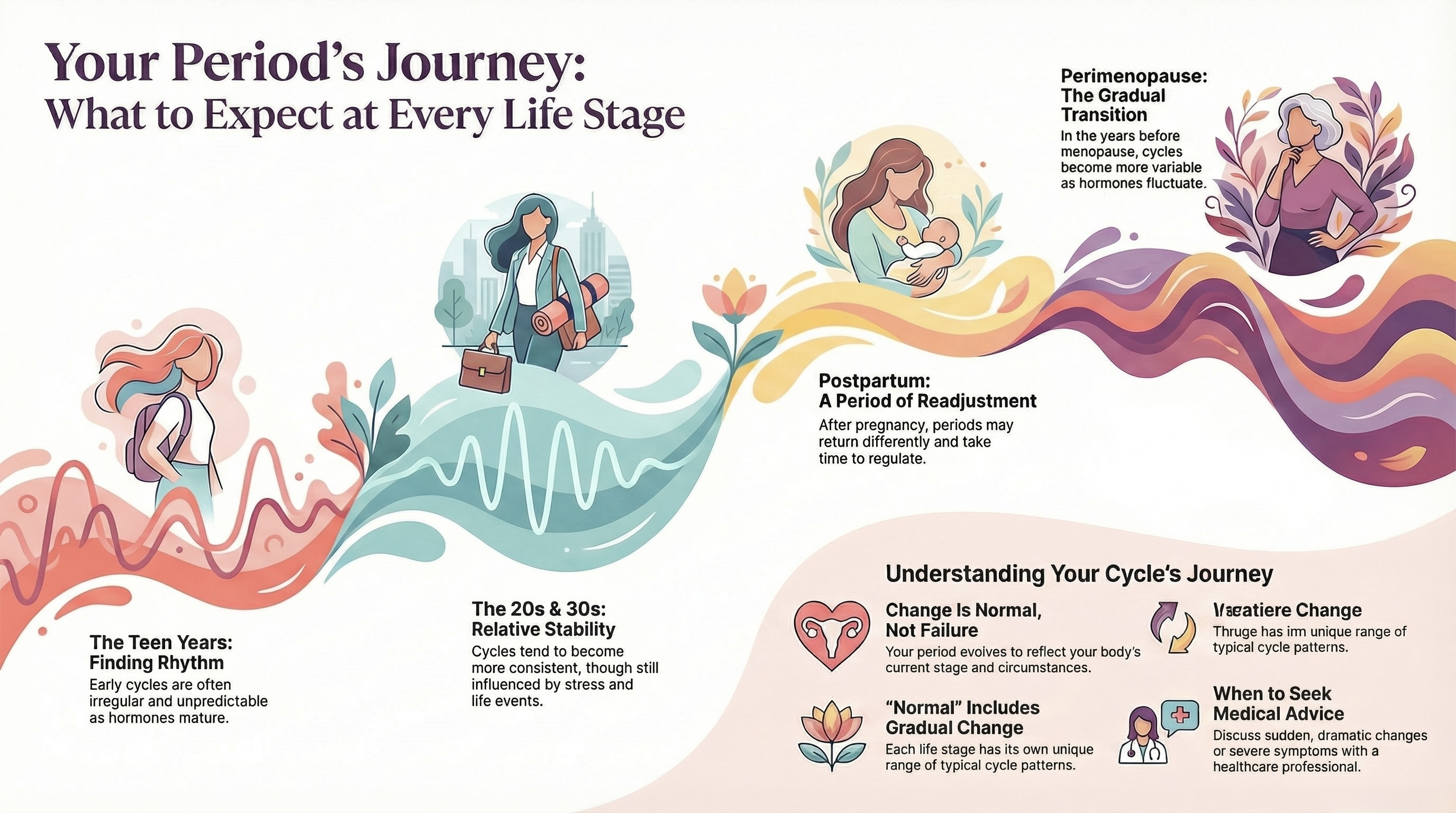
How Periods Can Change Across Life Stages
Periods change because bodies change
The menstrual cycle is guided by hormones that respond to age, health, stress, and life events. As the body moves through different stages, hormone patterns shift. These shifts influence cycle length, flow, symptoms, and regularity.
Change does not mean failure or decline. It reflects a system that is responsive and adaptive. Just as bodies change in other ways across life, periods do too.
The teen years: early cycles finding their rhythm
In the first few years after periods begin, cycles are often irregular. Hormonal communication between the brain and ovaries is still developing, and it can take time to settle into a more consistent pattern.
Periods during this stage may be unpredictable, lighter or heavier from month to month, or spaced far apart. Symptoms like cramps or mood changes may also shift as the body adjusts.
This early variability is common and usually part of the normal process of maturation.
The 20s and 30s: relative stability with flexibility
For many people, cycles become more consistent during their 20s and 30s. Periods may arrive within a familiar range, and symptoms may feel more predictable.
Even during this stage, change is still normal. Stress, work demands, sleep patterns, health changes, and major life events can all influence cycles. Some people notice gradual changes in flow, cycle length, or symptoms over these years.
Stability does not mean permanence. Flexibility remains part of the cycle.
Postpartum: a period of readjustment
After pregnancy and childbirth, cycles often change. Periods may take time to return, especially if breastfeeding, and when they do return, they may feel different than before.
Flow may be heavier or lighter. Timing may be irregular for a while. Symptoms can change in intensity or type. These shifts reflect the body recalibrating hormone levels after a major physiological event.
Postpartum cycles often adjust gradually rather than snapping back to a previous pattern.
Perimenopause: gradual transitions, not sudden stops
Perimenopause is the stage leading up to menopause, and it can begin years before periods stop entirely. During this time, hormone levels fluctuate more widely.
Cycles may become shorter, longer, or more irregular. Flow may change, and symptoms like cramps, mood shifts, or fatigue may feel different. Some months may feel familiar, while others feel noticeably different.
Perimenopause is not a sudden switch. It is a gradual transition that unfolds over time.
Common experiences people notice
Across life stages, people often notice that periods evolve rather than stay fixed. What felt typical at one age may shift later on.
Some notice changes in cycle length. Others notice changes in flow or symptoms. These changes may happen slowly, making them easy to overlook until looking back over time.
It is also common for periods to change alongside major life events, such as illness, stress, weight changes, or emotional transitions.
What is generally considered normal
Normal periods look different at different life stages. Irregular cycles in the early years, relative consistency in adulthood, postpartum changes, and increased variability in perimenopause can all fall within normal patterns.
Normal includes gradual change rather than abrupt transformation. It includes months that feel familiar and months that feel new.
Comparing one stage of life to another often leads to unnecessary concern. Each stage has its own range of typical experiences.
When it can make sense to seek medical advice
While change is expected, there are times when guidance can be helpful. Periods that suddenly change in a dramatic or persistent way, bleeding that is very heavy or prolonged, or symptoms that interfere with daily life may be worth discussing with a healthcare professional.
Seeking advice does not mean something is wrong. It provides reassurance and clarity when navigating transitions.
A calm conclusion
Periods are not meant to stay the same across a lifetime. They reflect the body’s current stage, circumstances, and needs. Change is not failure — it is adaptation.
Understanding how periods shift across life stages can help reduce fear and build trust in the body’s ability to adjust over time. Each phase brings its own patterns, and all of them deserve patience and compassion.