
Feeling more tired around your period is a common experience, yet it is often dismissed or misunderstood. Fatigue during this time can feel frustrating, especially when it disrupts routines or productivity. Understanding why this tiredness happens — and how it can vary — helps separate what is normal from what might deserve extra attention.
Period-related fatigue is not a personal weakness or a lack of motivation. It is often a reflection of real changes happening in the body.
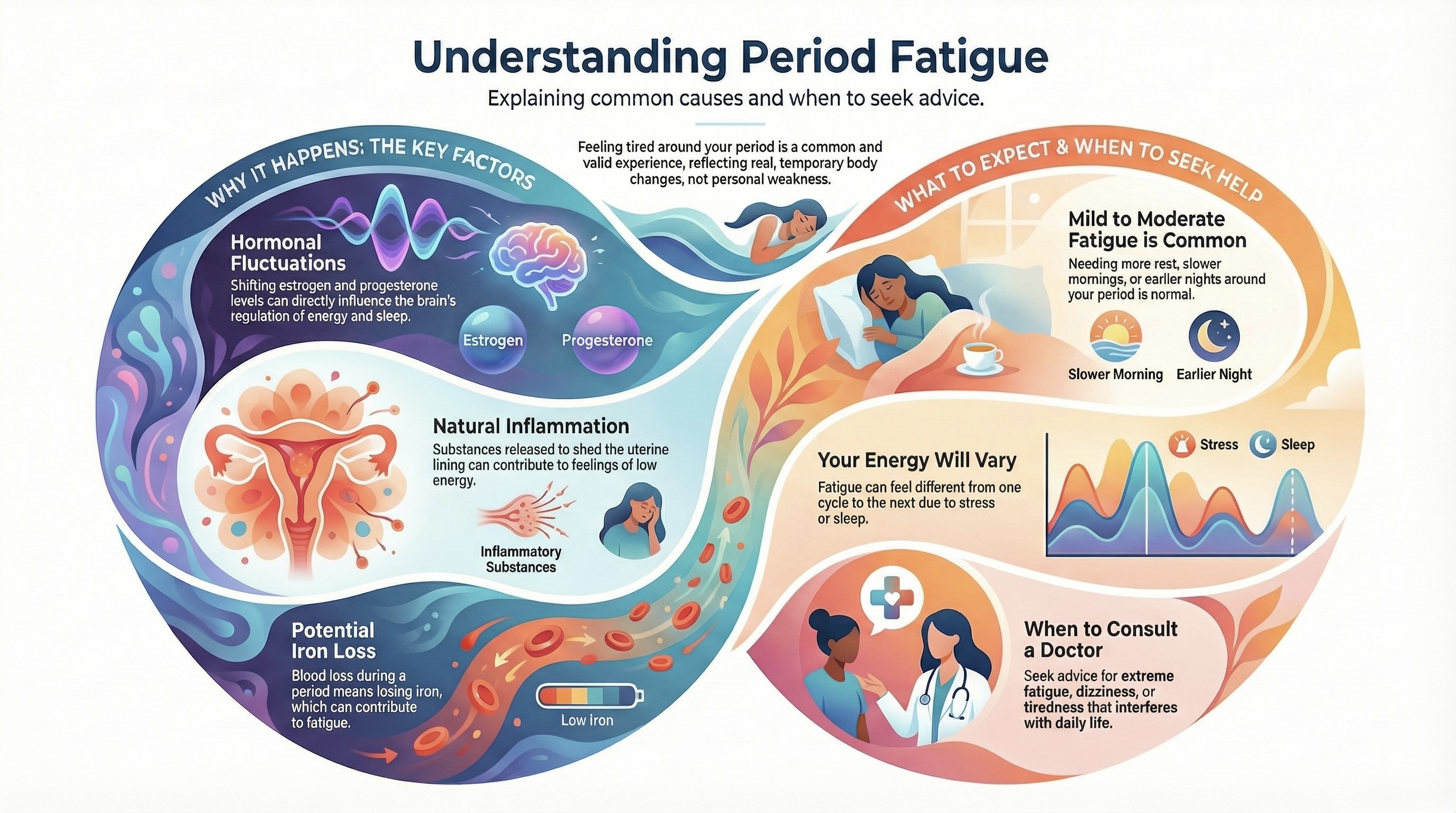
Understanding Period Fatigue
Why fatigue can show up around your period
Several overlapping factors can contribute to feeling tired before or during a period. One of the most significant is hormonal change. As the cycle progresses, levels of hormones like estrogen and progesterone rise and fall. These shifts can influence how the brain regulates energy, alertness, and sleep.
Inflammation also plays a role. During menstruation, the body releases natural substances involved in shedding the uterine lining. These substances can contribute to feelings of heaviness, soreness, or overall low energy. This process is temporary, but it can affect how the body feels for several days.
Sleep patterns may also change during this time. Some people notice lighter sleep, more frequent waking, or changes in dreams around their period. Even subtle sleep disruption can add to daytime fatigue.
Why rest needs can change
Energy levels are not meant to be constant. During certain parts of the cycle, the body may benefit from more rest or slower pacing. This does not mean something is wrong — it reflects shifting demands within the body.
Around a period, the body is actively shedding tissue and adjusting hormone levels. This internal work can leave less energy available for everything else. For some people, this shows up as physical tiredness. For others, it feels more mental, like difficulty concentrating or feeling emotionally drained.
Rest needs can also change based on life context. Stress, workload, emotional strain, and sleep debt from earlier in the month can all influence how fatigue feels during a period.
The role of iron loss
Blood loss during a period means a small amount of iron leaves the body each cycle. For many people, this loss is easily replaced through normal processes. For others, especially those with heavier bleeding, iron levels may be more affected.
Low iron levels can contribute to fatigue, weakness, or shortness of breath. Mentioning iron does not mean assuming a deficiency or diagnosis — it simply highlights one possible factor among many that can influence energy levels.
Iron-related fatigue is only one piece of a larger picture, and not everyone who feels tired during their period has low iron.
Common experiences people notice
Fatigue around a period can look different from person to person. Some people feel a gradual dip in energy in the days leading up to bleeding. Others feel most tired during the first few days of their period. Some notice mental fog or low motivation rather than physical exhaustion.
One cycle may feel draining, while the next feels manageable. Fatigue can also change with age, stress levels, sleep quality, and overall health. These shifts are common and do not automatically signal a problem.
Feeling tired does not always mean needing to stop everything. For many, it simply means moving through the day with less energy than usual.
What is generally considered normal
Mild to moderate fatigue around a period is common. Feeling the need for more rest, slower mornings, or earlier evenings can fall within normal patterns. Occasional cycles with noticeable tiredness are also common, especially during stressful times.
Normal includes variation. Some cycles may bring little fatigue, while others feel heavier. Normal does not require consistent energy levels every month.
What often matters more than a single tired cycle is how fatigue looks over time.
When it can make sense to seek medical advice
There are times when fatigue may be worth discussing with a healthcare professional. Fatigue that feels extreme, lasts beyond the period itself, or interferes significantly with daily life may deserve attention.
Persistent exhaustion across many cycles, fatigue accompanied by dizziness or shortness of breath, or tiredness that worsens over time can also be reasons to seek guidance. These conversations are about understanding and support, not jumping to conclusions.
Seeking advice does not mean something is definitely wrong. It simply helps clarify whether additional evaluation could be useful.
A calm conclusion
Fatigue around your period is a common and valid experience. Hormonal shifts, inflammatory processes, changing rest needs, and factors like iron loss can all contribute. Feeling more tired during this time does not mean the body is failing — it means it is responding to a natural process.
Understanding fatigue as variable and context-dependent can help reduce self-judgment and anxiety. Paying attention to patterns over time, rather than expecting constant energy, allows for a more realistic and compassionate view of the cycle.